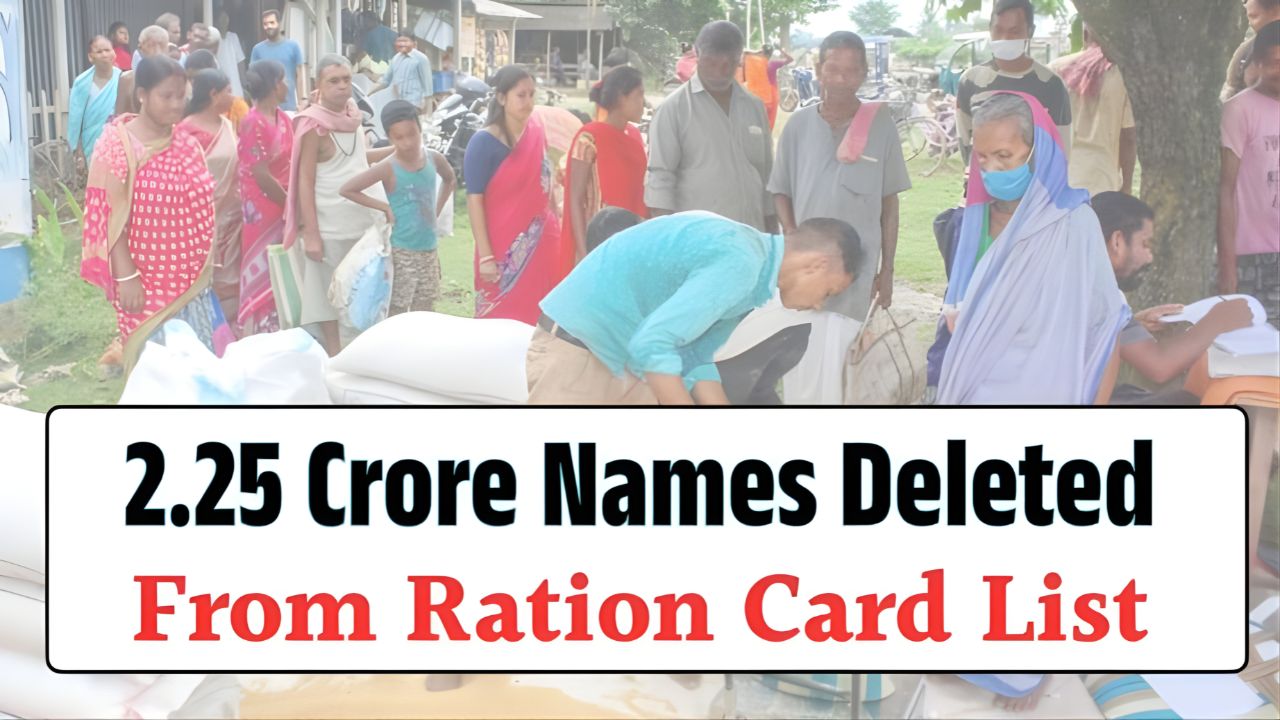
A major overhaul of the ration card system has begun across India, with around 2.25 crore names being removed from the beneficiary list starting today. The move has created concern among households that depend on subsidised food grains, as eligibility rules are being enforced more strictly than before.
Why the Government Removed So Many Names
The large-scale deletion follows a nationwide verification exercise aimed at identifying ineligible beneficiaries. Authorities reviewed income levels, asset ownership, duplicate entries, and outdated records to ensure that ration benefits reach only deserving families. Names found to be inconsistent with eligibility criteria were removed as part of the clean-up drive.
What This Means for Ration Card Holders
Households whose names have been deleted will no longer receive subsidised food grains under government schemes. For many families, this could directly impact monthly food security, making it important to understand whether the removal was due to genuine ineligibility or a documentation issue.

Who Is Most Likely to Be Affected
The deletion drive primarily targets individuals whose income levels exceed the prescribed limit, households with high-value assets, duplicate ration card holders, and cases where beneficiary records were not updated for a long time. Names of deceased persons that were still active in the system have also been removed.
Is This a Permanent Removal
The removal of names does not always mean a permanent loss of benefits. In cases where a genuine beneficiary was removed due to missing or incorrect data, there may be scope for correction through verification and record updates at the local level.

What Families Should Check Immediately
Ration card holders are advised to verify whether their names still appear on the updated beneficiary list. Those who discover that their names have been removed should review their eligibility details and documentation to determine the reason behind the deletion.
Impact on Free and Subsidised Ration Schemes
With fewer beneficiaries on the list, the government aims to reduce leakage and misuse of food subsidies. The freed-up quota is expected to help ensure better distribution among genuinely eligible households, strengthening the overall efficiency of the public distribution system.

Government’s Long-Term Objective
The larger goal behind this exercise is to create a transparent and accurate ration card database. By removing ineligible entries, authorities aim to make the system fairer, more targeted, and financially sustainable over the long term.
Public Reaction to the Deletion Drive
The sudden removal of crores of names has sparked mixed reactions. While some support the move to curb misuse, others fear that deserving families may be affected due to technical or administrative errors, highlighting the need for proper grievance redressal.

What Happens Next
The ration card system is expected to undergo continuous review, with further verification and updates in the coming months. Eligible families who were removed incorrectly may get opportunities to re-verify their status and restore benefits.
Final Takeaway for Households
The deletion of 2.25 crore names from ration cards marks one of the biggest beneficiary clean-up exercises in recent times. While the move aims to ensure fairness and proper targeting, families are urged to stay alert, verify their status, and take timely action if their ration benefits are affected.