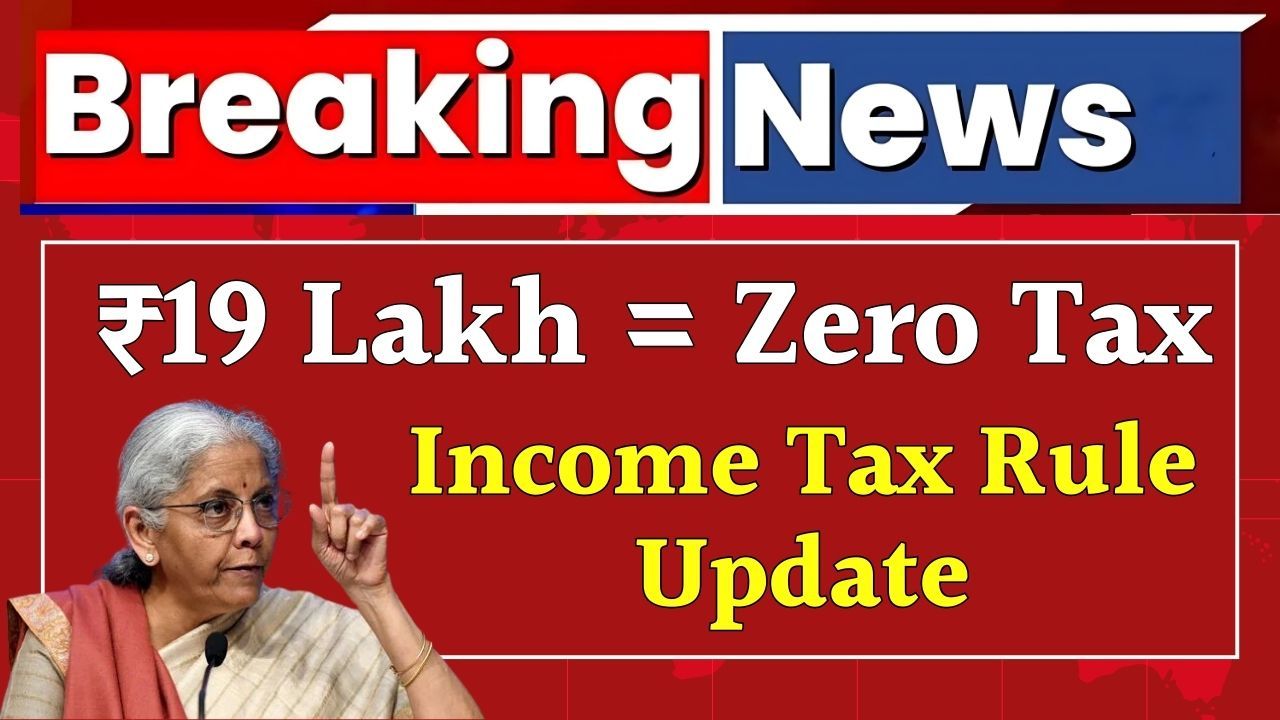
Recent income tax updates have created a lot of discussion around the possibility of earning up to ₹19 lakh annually while paying zero income tax. While it may sound unrealistic at first, this outcome becomes achievable when existing deductions, exemptions, and rebates are applied correctly under the law.
The Core Idea Behind Zero Tax on High Income
The key point is that ₹19 lakh is the gross income, not the taxable income. Income tax is calculated only on taxable income after subtracting eligible deductions and exemptions. When these are used efficiently, the taxable income can be reduced significantly, bringing the final tax liability down to zero.
Importance of Salary Structure in Tax Saving
A well-planned salary structure plays a crucial role in lowering tax outgo. Components such as allowances and reimbursements that qualify for tax relief help reduce the taxable portion of income. When structured smartly, a large part of the gross salary does not attract tax at all.

Standard Deduction Provides Immediate Benefit
The standard deduction available to salaried individuals directly reduces taxable income without requiring any documentation or investment. This deduction alone lowers the tax burden substantially and forms the first step in achieving a zero-tax outcome.
Role of Tax-Saving Deductions
Various deductions allowed under income tax laws further reduce taxable income. Investments and expenses linked to long-term savings, insurance, retirement planning, and specific approved purposes can collectively bring down the tax base to a much lower level.

How Rebates Eliminate Final Tax Liability
Once taxable income is reduced through deductions, the remaining calculated tax can be completely offset using the rebate provided under income tax rules. This rebate ensures that taxpayers within a defined taxable income limit end up paying zero tax even after computation.
Smart Calculation Makes All the Difference
The difference between paying heavy tax and paying no tax lies in planning. Individuals who plan investments early in the financial year and make full use of available deductions are able to achieve zero tax liability even at higher income levels like ₹19 lakh.

Fully Legal and Compliant Approach
It is important to understand that this method involves no tax evasion or shortcuts. The entire calculation is based on provisions already available in the income tax system. The benefit comes from awareness and correct application of the rules.
Who Can Benefit the Most
Salaried employees with access to tax-saving investment options and structured salary components benefit the most from these rules. Those who ignore deductions or delay planning may still end up paying tax despite having the same income.

What Taxpayers Should Keep in Mind
Tax rules can change, and deductions are subject to limits and conditions. It is essential to understand applicable provisions clearly and plan accordingly to avoid surprises at the time of filing returns.
Final Takeaway for Taxpayers
Earning ₹19 lakh and paying zero tax is possible through disciplined planning and smart use of income tax provisions. The update highlights that higher income does not automatically mean higher tax, as long as taxpayers understand the rules and use them wisely.