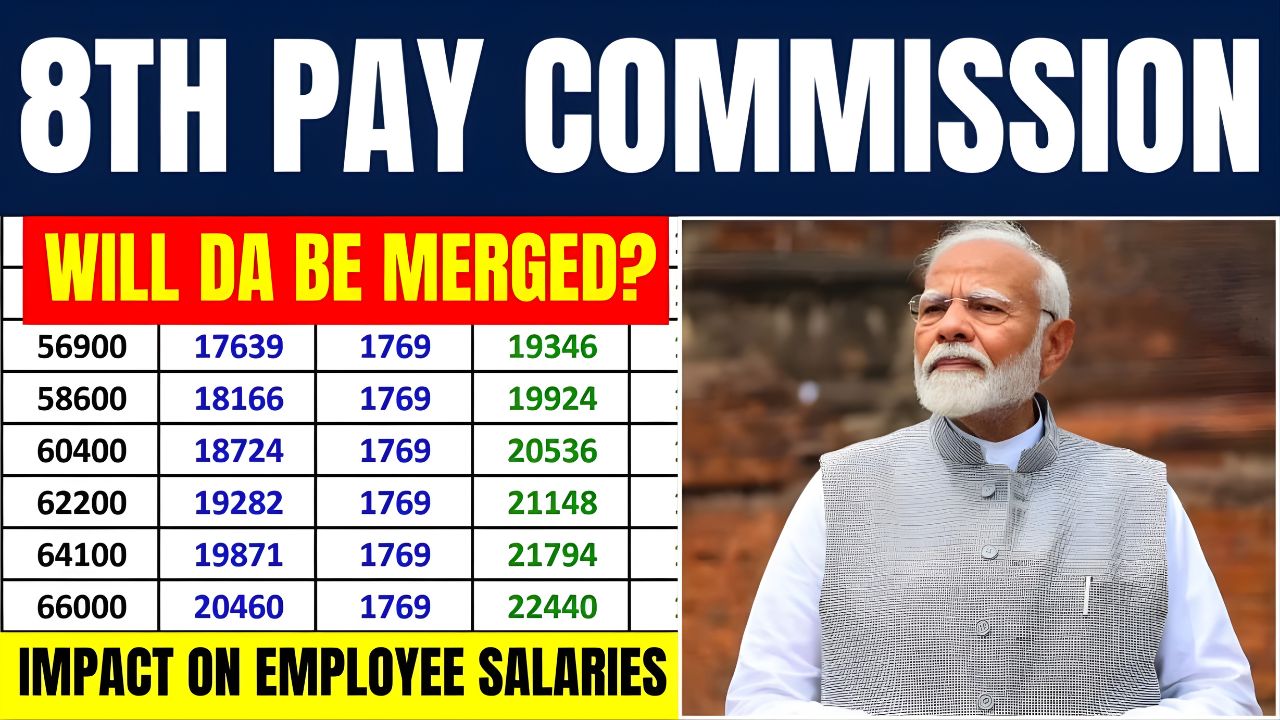
A significant update linked to the 8th Pay Commission has brought renewed optimism among central government employees and pensioners. The government has confirmed that up to 70 percent Dearness Allowance is set to be merged with basic pay as part of the upcoming pay revision framework. This move is expected to redefine salary structures and deliver a substantial financial boost.
What DA Merger With Basic Pay Means
Dearness Allowance is provided to offset the impact of inflation, and over time it grows substantially. When DA reaches a high level, merging it with basic pay becomes essential to maintain a balanced pay structure. Under the proposed 8th Pay Commission mechanism, 70 percent DA will be absorbed into basic pay, effectively raising the core salary component.
Why the Government Is Moving Towards DA Merger
Over the years, rising inflation has pushed DA to historically high levels. A higher DA without merger distorts the salary framework and limits future increments. By merging DA with basic pay, the government aims to reset the pay scale, ensure long-term sustainability, and provide a fair base for future allowances and benefits.

Impact on Monthly Salary of Employees
Once DA is merged with basic pay, the immediate effect will be a sharp rise in basic salary. Since several allowances and benefits are calculated as a percentage of basic pay, employees are likely to see an overall increase in their monthly earnings. This structural change is expected to have a compounding effect rather than a one-time benefit.
Long-Term Benefits Beyond Salary Hike
The DA merger will not only impact current salaries but also influence future increments, promotions, and retirement benefits. A higher basic pay leads to increased contributions toward pension-related calculations, ensuring better financial security after retirement.

Effect on Pensioners and Retirement Benefits
Pensioners are also expected to benefit from the DA merger under the 8th Pay Commission. Since pension calculations are directly linked to basic pay, the revised structure may result in higher pension payouts and revised retirement benefits, offering long-term relief amid rising living costs.
Implementation Timeline and Expectations
The DA merger is expected to be aligned with the broader rollout of the 8th Pay Commission recommendations, likely coming into effect from 2026. While detailed guidelines and exact implementation dates are awaited, the confirmation of the merger has already set expectations across employee groups.

Financial Implications for the Government
Merging 70 percent DA with basic pay will increase the government’s salary and pension expenditure. However, officials view this as a necessary reform to maintain parity with inflation and ensure employee morale. The move is also seen as a structured alternative to frequent interim relief measures.
Why This Update Matters to Employees
For central government employees, this announcement signals one of the most impactful pay-related reforms in recent years. Unlike temporary allowances, DA merger permanently enhances the salary base, making it one of the most awaited aspects of the 8th Pay Commission.

8th Pay Commission DA Merger
The confirmation of a 70 percent DA merger with basic pay under the 8th Pay Commission marks a decisive step toward comprehensive salary restructuring. If implemented as expected, the reform will deliver lasting financial benefits to employees and pensioners alike, reinforcing the role of the Pay Commission in adapting pay structures to economic realities.